

Wondering whether diamond-tip exfoliation or a chemical peel Burlington clients trust is right for your skin? This guide breaks down the differences so you can choose with confidence.
Choosing between diamond-tip exfoliation and a chemical peel Burlington residents often ask about can feel confusing when both promise smoother, brighter-looking skin. The truth is these two approaches work in fundamentally different ways, and understanding that difference makes it much easier to pick the right one for your skin — especially as our New England seasons shift from icy winters to humid summers.
At La Lueur Beauty & Spa on Cambridge Street, we offer both options because no single treatment fits every skin type or goal. Below, we break down how each method works, who tends to benefit most, and how Burlington's climate plays a role in your decision.
How Diamond-Tip Exfoliation Works
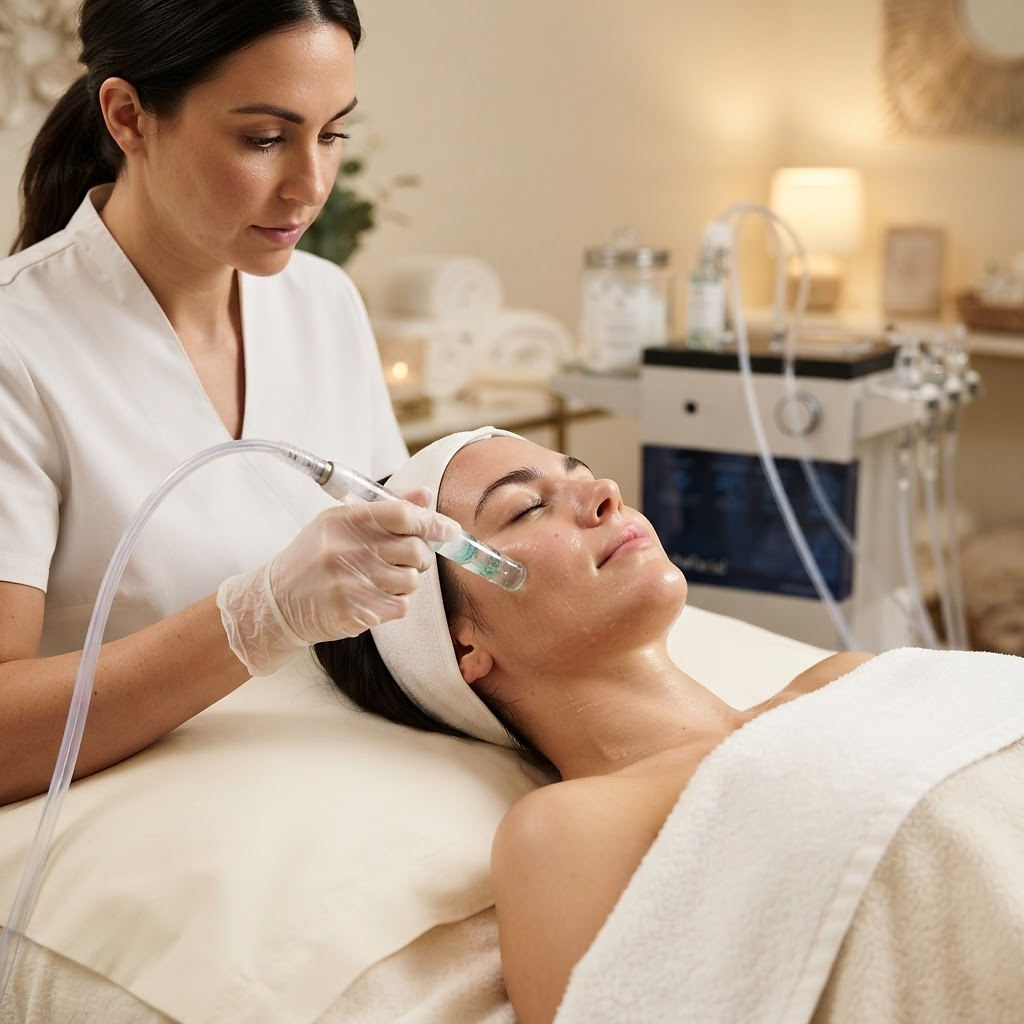
Diamond-tip exfoliation, delivered through our Microdermabrasion Facial, uses a wand tipped with fine diamond particles to gently buff away the outermost layer of dead skin cells. It's a physical exfoliation method — no acids involved — which makes it appealing to clients who want a noticeable refresh without much sensitivity afterward.
This 50-minute, $350 treatment is often chosen by clients who want:
- A quick pick-me-up before an event without significant downtime
- Help with the look of dullness, rough texture, or clogged pores
- A treatment that pairs easily with a regular skincare routine
Because it works on the surface layer, diamond-tip exfoliation is generally considered a lower-intensity option compared to chemical peels, though results and sensitivity vary from person to person.
Pro Tip: Schedule microdermabrasion at least a few days before a big event so any mild redness has time to settle.
How a Chemical Peel Works
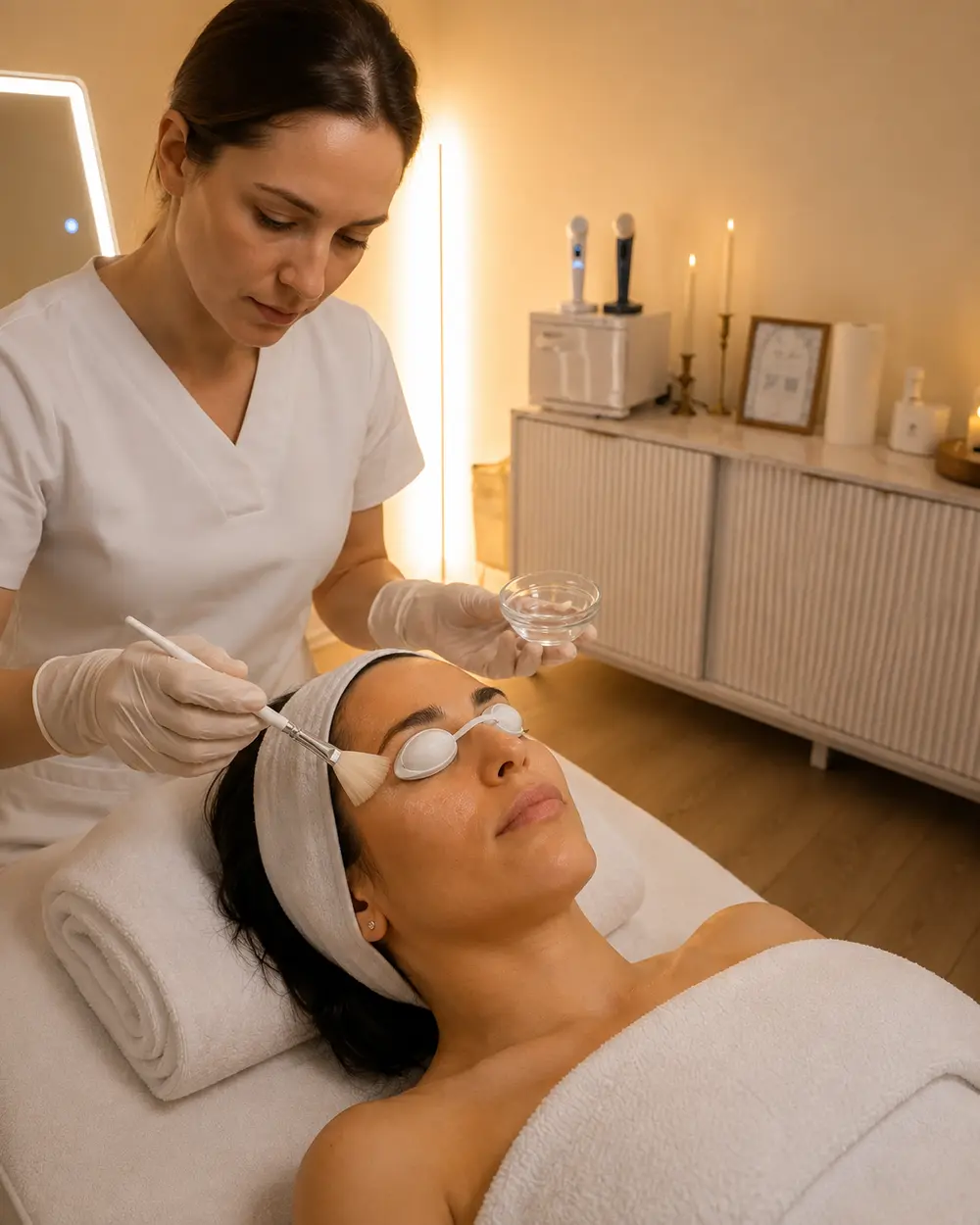
Our Chemical Peel treatment (60 minutes, $850) uses a solution of acids to encourage the skin's natural exfoliation process at a deeper level than diamond-tip exfoliation. Depending on the formulation used, peels can be tailored toward concerns like uneven tone, rough texture, or the look of past sun damage.
Peels tend to involve more visible peeling or flaking in the days following treatment compared to microdermabrasion. This is a normal part of the process for many clients, though everyone's skin responds differently. Because the effects are more pronounced, chemical peels are often recommended for clients who want to address deeper texture concerns and are comfortable with a short recovery window.
Comparing the Two Side by Side
When clients ask us to compare diamond-tip exfoliation with a chemical peel Burlington estheticians recommend, we usually walk through these key differences:
- Depth of action: Diamond-tip exfoliation works on the surface; chemical peels penetrate more deeply.
- Downtime: Microdermabrasion typically involves little to no downtime; peels may require a few days of visible flaking.
- Sensitivity: Peels can feel more intense during and after the treatment, especially for sensitive skin types.
- Frequency: Diamond-tip exfoliation can often be repeated more frequently than peels, which usually need more spacing between sessions.
For clients who aren't sure which route to take, we sometimes suggest starting with microdermabrasion to see how the skin responds before considering a peel. Others feel confident going straight to a peel if they're looking for a more noticeable change in texture. Suitability is always confirmed during a one-on-one consultation.
Why Burlington's Climate Matters
Massachusetts weather swings dramatically between seasons, and that matters more than people realize when it comes to exfoliation. Winters here bring dry, heated indoor air combined with harsh outdoor wind — a combination that can leave skin more reactive and prone to flaking regardless of which treatment you choose. Many clients find it helpful to lean toward diamond-tip exfoliation during the coldest months and consider a chemical peel when they can commit to a few quieter, lower-exposure days indoors.
Summer brings its own considerations. Humidity can increase oil production and contribute to congested pores, which is why some clients pair a Clarifying Facial with periodic exfoliation to help manage seasonal breakouts. Regardless of season, sun protection is non-negotiable after either treatment, since freshly exfoliated skin is more vulnerable to UV exposure. The American Academy of Dermatology offers helpful general guidance on sun protection that applies here in Burlington just as much as anywhere else.
Pro Tip: If you're treating your skin before an outdoor Burlington event — think summer concerts on the Town Common or a fall foliage wedding — book your peel or microdermabrasion at least one to two weeks ahead to allow full recovery time.
Building a Long-Term Exfoliation Plan
Rather than viewing diamond-tip exfoliation and chemical peels as competing options, many of our clients incorporate both into a longer-term skincare rhythm. For example, someone might choose microdermabrasion every few weeks for maintenance, then schedule a chemical peel seasonally for a deeper refresh. Others prefer to alternate exfoliation with treatments like our Hydra Facial or Dermaplaning Facial to keep skin feeling balanced without over-exfoliating.
If you're newer to professional exfoliation, our Clarifying Facial is a gentle starting point that helps assess how your skin responds before moving to more intensive options. You can also browse our Results Gallery to see the general range of outcomes clients have experienced with different treatments, keeping in mind that individual results vary.
Whichever path you choose, the most important step is an honest conversation about your skin's history, sensitivity, and goals. Our team at La Lueur Beauty & Spa is happy to walk through both options in detail and help you decide what makes sense for your skin and your schedule — feel free to reach out through our Contact & Location page with any questions before you book.
Frequently asked
Questions we hear most
Which is better, diamond-tip exfoliation or a chemical peel?+
Neither is universally "better" — diamond-tip exfoliation is a gentler, physical approach ideal for surface dullness, while a chemical peel works deeper for texture and tone concerns. The right choice depends on your skin type, goals, and how much downtime you can accommodate.
Is there downtime after a chemical peel in Burlington?+
Most clients notice some redness, tightness, or light flaking in the days following a chemical peel, though the exact experience varies by skin type. Our team reviews what to expect during your consultation so you can plan accordingly.
Can I get diamond-tip exfoliation and a chemical peel in the same visit?+
These treatments are typically scheduled separately to avoid over-exfoliating the skin. Your esthetician can help you build a timeline that spaces treatments appropriately.
How often should I get a chemical peel?+
Frequency depends on your skin's needs and the peel strength used, and this is best determined during a consultation. Many clients space peels out several weeks apart to allow the skin to fully recover between sessions.
Does Burlington's weather affect exfoliation treatments?+
Yes — cold, dry winter air can leave skin more sensitive, while summer humidity may increase oil production. Both factors are worth mentioning at your consultation so your esthetician can tailor recommendations accordingly.
Ready when you are
Book a consultation in Burlington
Every plan starts with a conversation about your goals and your skin. We will confirm what suits you and map the treatments from there.
Services are subject to consultation and individual suitability. Results vary. No result is guaranteed.