

Curious about dermaplaning in Burlington MA and what it does for fine facial hair? Here are the answers Burlington clients ask most before booking.
If you've been searching for answers about dermaplaning in Burlington MA, you're not alone. This exfoliating treatment has become one of the most requested services for clients dealing with fine facial hair, dull texture, or makeup that just won't sit right. Between Burlington's dry winter heating season and the humid stretches of a Massachusetts summer, skin here goes through a lot — and dermaplaning is one of the simplest ways to reset your surface texture without downtime.
Below, we're answering the questions we hear most often at La Lueur Beauty & Spa about dermaplaning and fine facial hair, so you can walk into your appointment feeling informed rather than uncertain.
What Exactly Is Dermaplaning?
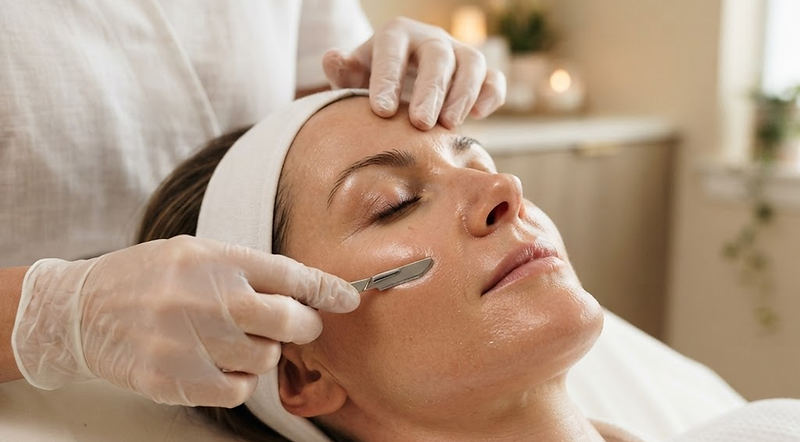
Dermaplaning is a manual exfoliation technique performed with a sterile, surgical-grade blade held at an angle against the skin. An esthetician gently glides the blade across the face to lift away the outermost layer of dead skin cells along with vellus hair — the fine, colorless "peach fuzz" most people have on their cheeks, jawline, and upper lip.
Unlike shaving with a razor at home, this is done under controlled, sanitary conditions with attention to the natural contours of your face. The Dermaplaning Facial at La Lueur runs 50 minutes and is priced at $350, giving your esthetician time to properly cleanse, exfoliate, and finish with calming products suited to your skin.
Does Fine Facial Hair Really Grow Back Thicker?
This is the number one question we get, and the answer is no. Hair thickness and color are determined by the follicle beneath the skin, not by how the hair is cut at the surface. Since dermaplaning only removes the visible portion of vellus hair, it has no effect on how future hair grows in. According to the American Academy of Dermatology, shaving or surface exfoliation does not change hair texture or growth rate — it simply feels coarser temporarily because the hair tip is blunt rather than tapered.
Pro Tip: If you're nervous about upper-lip or jawline hair looking different afterward, ask your esthetician to show you the treated area under good lighting before you leave — most clients are surprised at how natural it looks.
Why Burlington Clients Ask About This Treatment Seasonally
New England weather plays a real role in why dermaplaning trends upward at certain times of year. In winter, indoor heating and cold outdoor air can leave skin flaky and prone to holding onto dead cells, which makes foundation and moisturizer sit unevenly. In summer, humidity combined with sweat and sunscreen can trap debris around fine facial hair, contributing to a duller look.
Many Burlington clients book dermaplaning:
- Before a wedding, holiday party, or professional headshot session
- At the start of a new season to reset their skincare routine
- Alongside a facial like the Ultimate Glow & Lift Facial for a more complete refresh
- Before starting a new retinol or vitamin C product, since smoother skin can support better absorption
How Dermaplaning Compares to Other Exfoliating Options
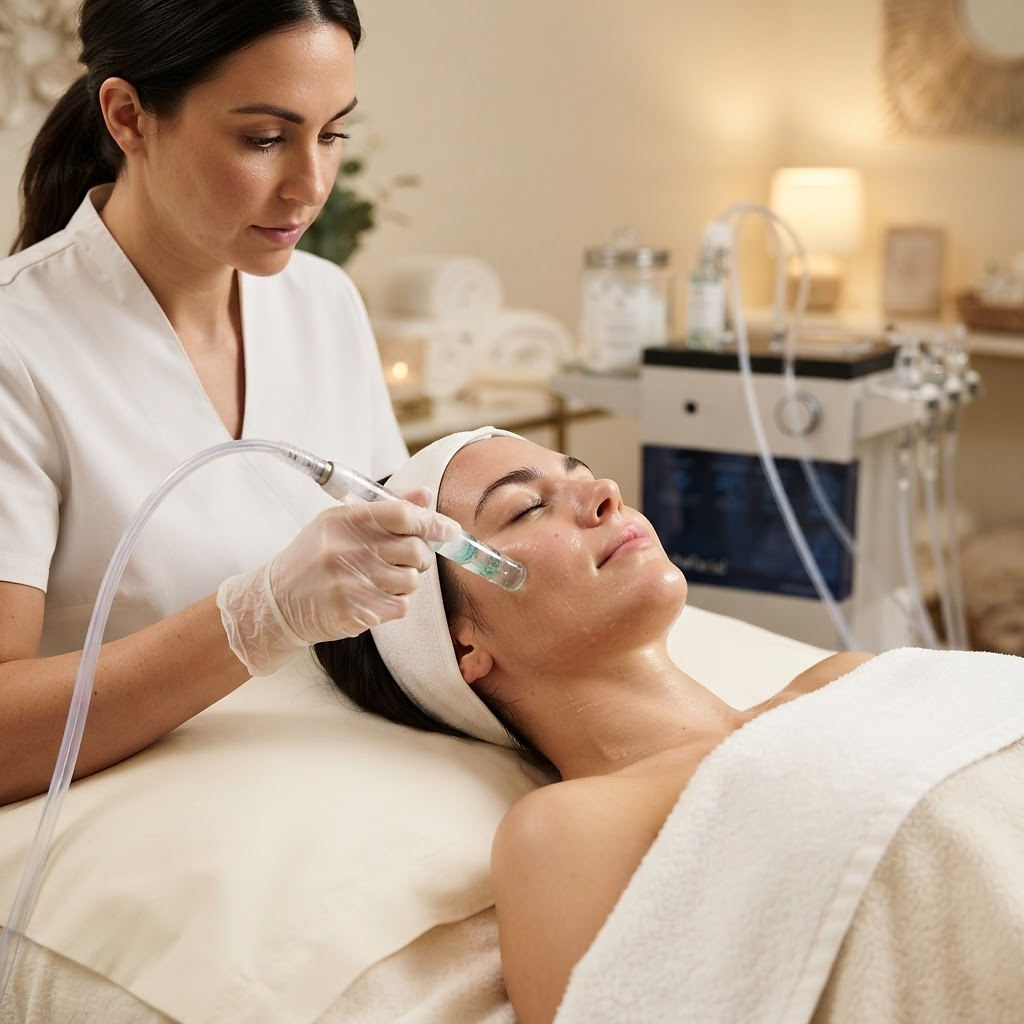
Dermaplaning isn't the only exfoliation method on our menu, and it's not automatically the right fit for everyone. A Microdermabrasion Facial uses a diamond-tip wand to polish the skin's surface, which can be a better option for clients who don't have much visible vellus hair but still want texture improvement. A Chemical Peel works at a slightly deeper level using active acids, which may be preferred for tone and texture concerns rather than surface hair.
If your main goal is smoother makeup application and reduced peach fuzz, dermaplaning tends to be the most direct route. If you're also dealing with congestion or breakouts, a Clarifying Facial might be recommended instead, or in combination over time.
Pro Tip: Avoid other exfoliating treatments or at-home scrubs for about a week before your dermaplaning appointment so your skin isn't over-sensitized going in.
What to Expect During and After Your Appointment
A typical dermaplaning session at La Lueur starts with a cleanse, followed by the blading process itself, which most clients describe as feeling like a light scratching or tickling sensation rather than pain. The treatment is finished with hydrating or calming products depending on your skin's needs that day.
Afterward, skin often looks brighter almost immediately since dead skin and fine hair are no longer creating a dulling layer. There's generally no visible downtime, though some people notice mild redness for a short period, similar to a light exfoliation. Sun protection is especially important in the days following treatment, and this holds true whether it's July in Burlington or a bright, reflective snow day in January.
For clients curious about what results can look like over time, our Results Gallery shows examples from a range of treatments, though it's worth remembering that individual outcomes vary based on skin type and history.
Finding the Right Fit for Your Skin
Because everyone's skin, hair density, and goals are different, the best way to know if dermaplaning is right for you is a short consultation. This is also the time to mention any sensitivities, active breakouts, or medications that might change which treatment is recommended, whether that ends up being dermaplaning, a Microneedling with Salmon DNA session, or something else entirely from the menu.
If you have more questions about dermaplaning or want to talk through your specific skin concerns before booking, our Contact & Location page has everything you need to reach the Burlington studio directly. We're always glad to walk Burlington clients through what to expect so there are no surprises on treatment day.
Frequently asked
Questions we hear most
Does dermaplaning make facial hair grow back thicker?+
No — this is a persistent myth. Vellus (fine, peach-fuzz) hair has no root structure connected to thickness changes, so it grows back the same fineness and color as before. The blade only removes the hair at the surface, not the follicle.
How long do dermaplaning results typically last?+
Most Burlington clients notice smoother texture and reduced peach fuzz for about three to four weeks. Since new vellus hair grows in gradually, many people schedule the treatment monthly as part of an ongoing skincare rhythm.
Can dermaplaning be combined with other facials?+
Yes, dermaplaning is often paired with treatments like a Chemical Peel or Hydra Facial to help other products absorb more evenly, since surface hair and dead skin are cleared first. Your esthetician can recommend combinations at your consultation.
Is dermaplaning safe for sensitive or acne-prone skin?+
Dermaplaning can be appropriate for many skin types, but active breakouts or certain sensitivities may call for a different approach, such as a Clarifying Facial. A consultation helps determine the best fit for your specific skin.
Will dermaplaning help with makeup application?+
Many clients say makeup glides on more smoothly after dermaplaning since fine hair and flaky skin are no longer creating texture. Individual experiences vary, and results are not guaranteed for every skin type.
Ready when you are
Book a consultation in Burlington
Every plan starts with a conversation about your goals and your skin. We will confirm what suits you and map the treatments from there.
Services are subject to consultation and individual suitability. Results vary. No result is guaranteed.