

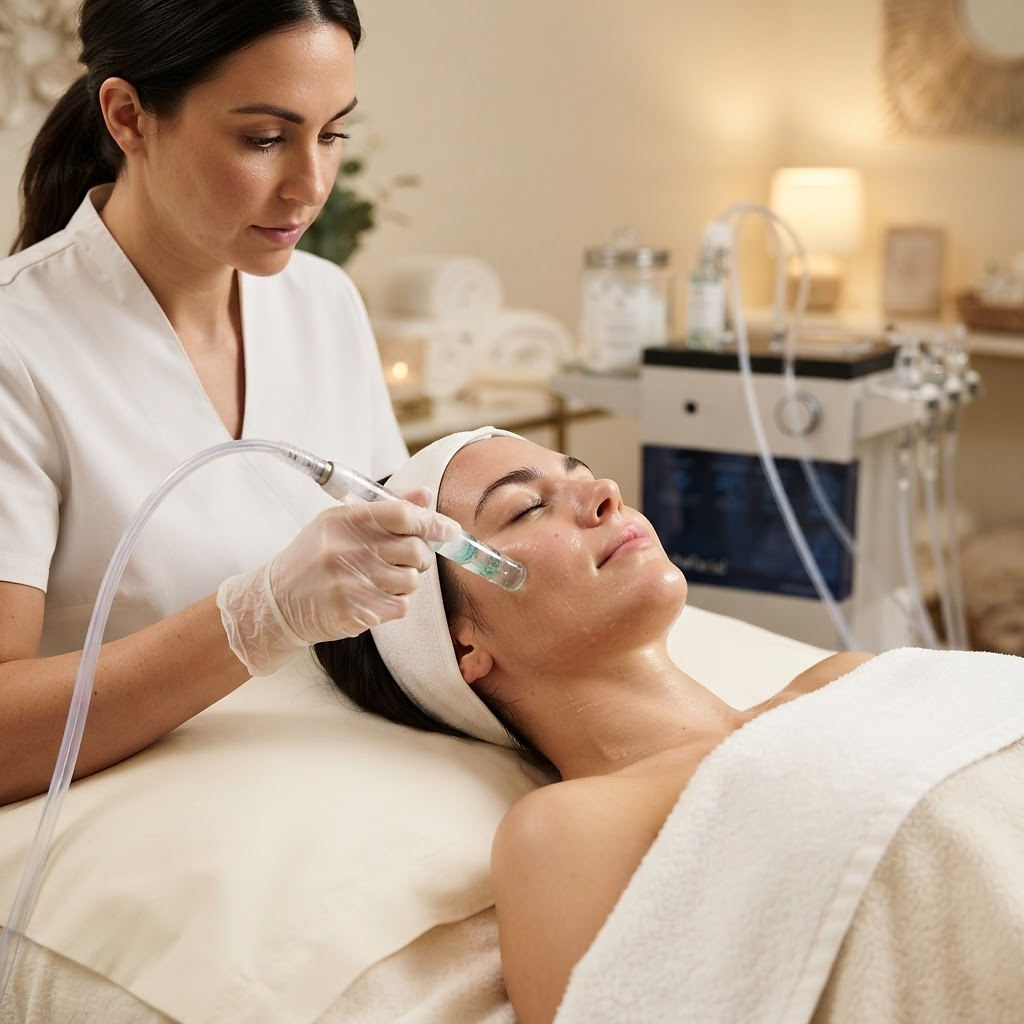

Finding the right combination skin facial in Massachusetts means matching treatments to your skin's dual needs—here's how La Lueur Beauty & Spa approaches it.
Combination skin can feel like a moving target, especially here in Massachusetts where humidity, heat, and bitter cold all take their turns throughout the year. If you're searching for a combination skin facial Massachusetts clients actually recommend, the goal isn't to pick one single "fix-all" treatment—it's to understand how your skin behaves and choose services that respect both its oily and dry sides at once.
At La Lueur Beauty & Spa in Burlington, we see this skin type constantly. It's arguably the most common pattern among New England clients, largely because our climate swings so dramatically. Below, we'll walk through what combination skin looks like, why Massachusetts weather complicates it, and which of our treatments tend to work well together for this skin pattern.
What Combination Skin Looks Like in Practice
Combination skin generally shows up as an oilier T-zone—forehead, nose, and chin—paired with cheeks and jawline that stay closer to normal or dry. Some people notice enlarged pores or occasional shine down the center of the face while the outer areas feel tight or flaky, particularly after a Massachusetts cold snap.
According to the American Academy of Dermatology, skin type can shift due to hormones, weather, and even the products used, which explains why so many people feel like their skin "changes its mind" throughout the year. This is especially true in a state where January humidity levels can be a fraction of what they are in July.
Why New England Weather Complicates Combination Skin
Massachusetts doesn't do gentle transitions. We go from humid summers that can trigger extra oil production to dry, heated winters that pull moisture straight out of the skin. For combination skin, this means:
- Summer humidity can intensify T-zone shine and clogged pores.
- Winter's dry indoor heat can leave cheeks flaking while the T-zone still produces excess oil.
- Spring pollen and allergy season can add sensitivity to already-stressed skin.
- Wind exposure during commutes or outdoor activities can accelerate moisture loss on drier areas.
This back-and-forth is exactly why a one-size-fits-all facial routine rarely works long-term for combination skin in this region.
Pro Tip: If your T-zone gets oilier in summer but your cheeks stay dry all year, ask your esthetician about zone-specific product application during your facial rather than a uniform mask across the whole face.
Treatments That Can Be Tailored for Combination Skin
Several options on our menu can be adjusted to address the dual nature of combination skin. A Clarifying Facial (50 min, $150) is often a solid starting point—it focuses on decongesting pores and helping the look of oilier areas without a heavy-handed approach that could dry out the cheeks.
For clients wanting deeper hydration paired with light exfoliation, the Hydra Facial (60 min, $900) uses a multi-step process that can be customized to target oil and congestion in the T-zone while still supporting hydration elsewhere on the face.
If texture, dullness, or uneven tone is part of the picture, a Microdermabrasion Facial (50 min, $350) offers manual exfoliation that can help smooth rougher patches, which combination skin sometimes develops around the nose and chin.
For those interested in more noticeable texture refinement, a Chemical Peel (60 min, $850) may be discussed at consultation—strength and frequency are always tailored to sensitivity levels, which combination skin can have in the drier zones even while the T-zone tolerates more.
Building a Seasonal Rhythm Around Your Skin
Many Massachusetts residents find it useful to think of their combination skin care like they think of their wardrobe—layered and season-dependent. In warmer months, lighter, oil-focused treatments may feel more appropriate. As the air dries out in fall and winter, adding hydration-forward options becomes more relevant.
A few general seasonal habits many clients find helpful:
- Rotate between oil-focused and hydration-focused facials as the seasons change.
- Keep sun protection consistent year-round, even on cloudy Massachusetts days.
- Pay attention to how your skin reacts after any treatment before scheduling the next one.
- Communicate changes in your skin at each visit so treatments can be adjusted accordingly.
For clients wanting a slightly more intensive option during the colder months, Microneedling with Salmon DNA (60 min, $750) is sometimes discussed as a way to support overall skin texture, though suitability depends on individual skin sensitivity and is confirmed at consultation.
Pro Tip: Bring a quick note about how your skin has changed over the past month—drier, oilier, more reactive—so your esthetician can adjust the facial approach on the spot rather than using a generic plan.
Why a Consultation Matters for Combination Skin
Because combination skin isn't uniform, the most effective approach usually comes from an in-person look at your specific pattern. What works beautifully for a client with a mild T-zone shine may be too light for someone dealing with more pronounced oil and congestion, and vice versa for the drier areas.
During a consultation, we take into account your current routine, how your skin has behaved through past Massachusetts seasons, and any recent changes before recommending a facial or combination of services. You're also welcome to browse our Results Gallery to get a general sense of what different treatments can look like, though individual results always vary.
If you're ready to talk through your options, our Contact & Location page has everything you need to reach the Burlington studio.
Combination skin doesn't have to feel like a constant balancing act. With the right seasonal approach and a treatment plan built around how your skin actually behaves—not just a generic skin type label—it's entirely possible to feel more confident in your skin no matter what a Massachusetts month throws at you next.
Frequently asked
Questions we hear most
What does combination skin actually mean?+
Combination skin typically refers to an oilier T-zone (forehead, nose, chin) paired with normal to dry cheeks. It's one of the most common skin types, and it often shifts with weather, hormones, and product use, which is why many Massachusetts residents notice seasonal changes in how their skin behaves.
Which facial is best for combination skin in Massachusetts?+
Many clients with combination skin enjoy the Hydra Facial or Clarifying Facial because both can be customized to hydrate drier areas while addressing oil and congestion elsewhere. The best option really depends on your specific concerns, which is why a quick consultation is recommended.
How often should combination skin get a facial in New England?+
A general guideline many estheticians suggest is every four to six weeks, though this can vary based on the season and treatment type. Winter dryness or summer humidity in Massachusetts may call for slight adjustments to that schedule.
Can chemical peels help combination skin?+
A Chemical Peel can support smoother-looking texture and help the appearance of congestion in oilier areas, but strength and frequency should be discussed at consultation since combination skin often has more sensitive patches too. Individual suitability and results vary from person to person.
Do I need different products for the oily and dry parts of my face?+
Many people with combination skin find it helpful to use lighter, oil-balancing products on the T-zone and richer moisturizers on the cheeks. Your esthetician can offer general guidance during your visit, though a dermatologist is best for personalized medical skincare advice.
Ready when you are
Book a consultation in Burlington
Every plan starts with a conversation about your goals and your skin. We will confirm what suits you and map the treatments from there.
Services are subject to consultation and individual suitability. Results vary. No result is guaranteed.